
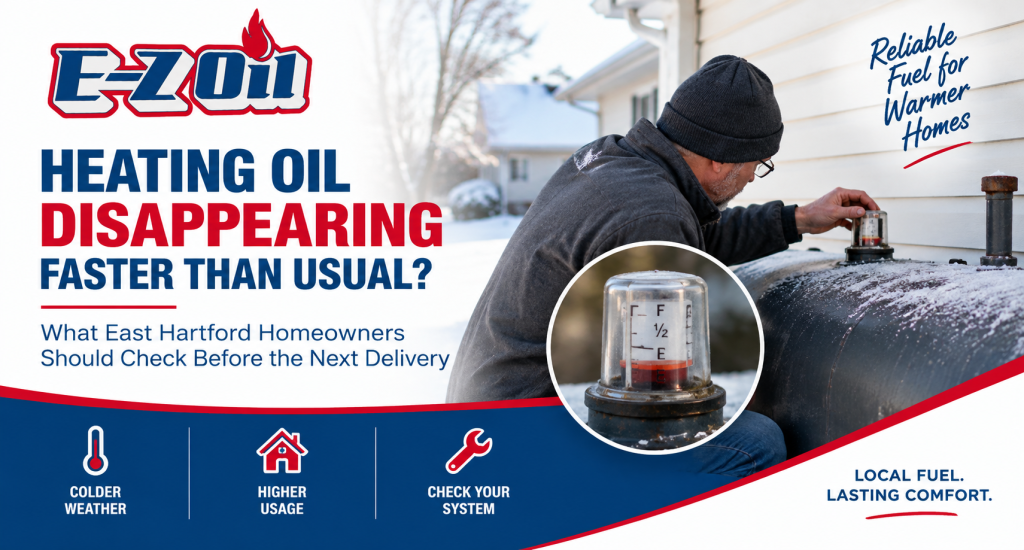
If you heat your East Hartford home with oil, you probably have a general idea of how long a tank usually lasts during winter. So, when the gauge begins dropping much faster than expected, it is natural to wonder what has changed.
Higher fuel use does not automatically mean there is a problem with the heating oil or your delivery. Colder weather, thermostat settings, home heat loss, heating-system condition, and changes in your household can all influence how quickly oil is consumed. Understanding these factors can help you identify what may be happening before simply scheduling deliveries more frequently.
Start With the Outdoor Temperature
One of the simplest explanations for increased heating-oil use is colder weather. When outdoor temperatures drop significantly, your heating system has to run longer to maintain the temperature set on your thermostat.
A tank that lasted several weeks during mild weather may empty considerably faster during a period of freezing temperatures. Instead of comparing fuel use only by the number of days between deliveries, think about the weather during those periods as well.
Homeowners using Heating Oil — East Hartford should therefore monitor both their tank level and changing winter conditions when estimating when another delivery may be needed.
Check Whether Your Thermostat Habits Have Changed
Even small changes to thermostat settings can affect how frequently the heating system operates.
Perhaps someone in the household has started working from home, children are home more often, or you are simply keeping the house warmer than you did last winter. If the thermostat remains higher throughout the day instead of being lowered during periods when the home is empty, fuel consumption may increase.
Before assuming something is wrong, compare your current heating habits with previous months or winters. A change in daily routine can sometimes explain an unexpected increase in oil use.
Look for Places Where Heat May Be Escaping
Your heating system may be producing enough heat, but your home might not be holding onto it efficiently.
Drafty windows and doors, insufficient insulation, gaps around exterior penetrations, and other air-leakage areas can allow heated indoor air to escape. When that happens, the heating system has to operate more frequently to maintain comfortable indoor temperatures.
Pay attention to rooms that suddenly feel colder, noticeable drafts, cold areas around windows and doors, or significant temperature differences between rooms. These signs do not identify the exact problem, but they can indicate that the home deserves a closer look.
Consider the Condition of the Heating System
A heating system that is operating does not necessarily mean it is operating as efficiently as it could.
Oil-fired heating equipment contains components that require periodic inspection, cleaning, and adjustment. If maintenance has been delayed, the system may need attention. Unusual noises, frequent cycling, inconsistent heating, or other changes in normal operation are worth noting.
E-Z Oil Company, Inc provides heating-oil delivery along with heating-system service and tune-ups. Having the system evaluated can help determine whether maintenance or another heating-related issue may be contributing to changes in performance.
Check Your Tank Gauge Regularly
Do not wait until the house feels cold to check the oil level.
During colder periods, make a habit of looking at the tank gauge regularly. Monitoring it can help you understand your household’s normal usage pattern and make unusual changes easier to notice.
Remember that a tank gauge provides an estimate rather than a precise gallon-by-gallon measurement. The important thing is to watch the overall trend. If the level appears to be falling significantly faster than it normally does under similar conditions, consider what else has changed around the home.
Don’t Ignore Possible Tank or Fuel-Line Concerns
An unexplained change in fuel level deserves attention, particularly if it cannot be connected to colder weather or increased heating use.
Homeowners should be alert for unusual oil odors, visible staining, dampness around accessible components, or other noticeable changes around the tank and fuel lines. Avoid attempting to diagnose or repair fuel-system problems yourself. If you suspect a leak or equipment issue, contact a qualified professional promptly.
Residents who use Heating Oil — Windsor Locks face many of the same winter considerations: dependable fuel supply matters, but so does paying attention to how the entire heating system is performing.
Think About Changes Around the Household
Sometimes increased oil consumption has a very ordinary explanation.
More people staying home means doors may open more frequently, hot-water demand may increase if the system also uses heating oil for domestic hot water, and indoor temperatures may be maintained for longer periods.
Renovations or additions can also change heating demand. Even opening previously unused rooms and keeping them heated can influence overall consumption.
Homeowners researching Heating Oil—Portland can benefit from the same approach: track fuel use alongside weather, household routines, and heating-system performance instead of judging consumption from the tank gauge alone.
Plan the Next Delivery Before the Tank Gets Too Low
If your household is using oil faster than expected, avoid waiting until the tank is nearly empty before thinking about the next delivery.
Monitoring the gauge more frequently during periods of very cold weather can give you more time to plan. Homeowners may also want to learn about available delivery arrangements that can make winter fuel management easier.
Final Thoughts
Heating oil disappearing faster than usual does not point to one single cause. Cold weather, thermostat changes, heat loss, household routines, heating-system condition, and possible equipment concerns can all affect consumption.
For East Hartford homeowners, the best first step is to compare current conditions with what is normal for the home. Watch the tank level, consider recent weather and household changes, and pay attention to how the heating system is operating.
If fuel consumption remains unusually high without a clear explanation, a professional evaluation can help determine whether the heating system or another part of the home needs attention.