
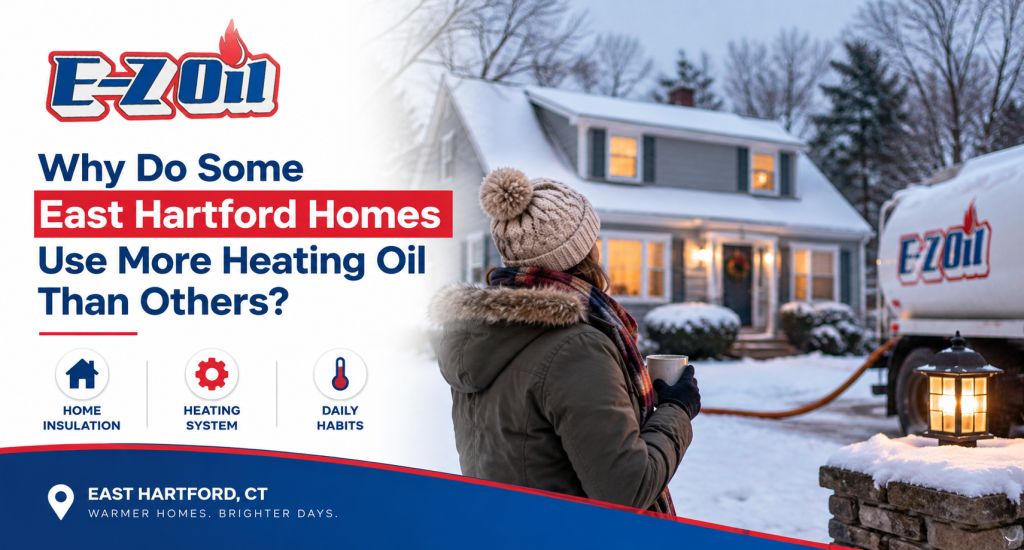
Two homes can sit on the same East Hartford street, experience the same winter weather, and still use very different amounts of heating oil. One homeowner may go weeks without thinking about the fuel level, while another seems to need deliveries much more often. That difference can be confusing, but heating oil consumption is influenced by far more than the size of a house.
The age of the property, insulation, heating equipment, thermostat habits, windows, air leakage, and even the number of people living in the home can affect fuel use. Understanding these factors can help East Hartford homeowners recognize what is normal for their property and when higher consumption may deserve attention.
Every Home Holds Heat Differently
A home’s construction has a major influence on how easily it stays warm. Two houses with similar square footage may perform very differently if one has updated insulation and air sealing while the other has older materials or gaps that allow heated air to escape.
Attics, exterior walls, basements, crawl spaces, windows, and doors are all part of the home’s thermal boundary. When that boundary has weak areas, the heating system may have to operate more frequently to maintain a comfortable temperature.
Homeowners working with E-Z Oil Company, Inc can also consider their fuel-delivery history alongside changes in weather and household use to better understand their normal consumption pattern.
Older Homes Can Have Different Energy Needs
East Hartford has homes from many different construction periods. An older home is not automatically inefficient, especially if it has been upgraded, but original insulation, older windows, or unsealed openings can affect heat retention.
Renovations matter as well. Adding insulation, replacing windows, sealing drafts, or improving other parts of the building envelope can change how much heating energy a property needs.
This is why simply comparing the age or size of two houses does not provide the complete picture.
Heating Equipment Makes a Difference
The condition and operation of the heating system also influence fuel consumption. Equipment that runs for long periods or struggles to maintain the thermostat setting may use more fuel than expected.
Regular maintenance can help identify issues affecting heating performance. Homeowners should also pay attention to unusual noises, inconsistent temperatures, frequent cycling, or changes in how long the system seems to operate.
People researching Heating Oil—Portland may face many of the same considerations because heating-oil usage depends on the relationship between the home, equipment, weather, and household habits—not location alone.
Thermostat Habits Add Up Over Time
Small differences in thermostat settings can become significant over an entire Connecticut heating season.
A household that prefers warmer indoor temperatures will generally require more heating than one that maintains a lower setting. Fuel use can also change when someone starts working from home, a family member spends more time indoors, or previously unused rooms begin being heated regularly.
Programmable and smart thermostats can help households create schedules around their routines, but homeowners should still review those schedules periodically to ensure they reflect how the home is actually being used.
Hot Water May Be Part of the Picture
In some homes, heating oil does more than provide space heating. It may also be connected to domestic hot-water production.
That means showers, laundry, dishwashing, and other hot-water habits can contribute to overall fuel consumption. A larger household may therefore use more heating oil than a neighboring property even when both homes are kept at similar temperatures.
This is another reason direct comparisons between households can be misleading.
Homeowners learning about Heating Oil — Windsor Locks should consider the complete range of household activities that may influence heating demand rather than looking only at the thermostat.
Weather Exposure Can Change How a House Performs
Even neighboring homes do not always experience weather in exactly the same way.
A property exposed to strong winter winds may lose heat differently from a home protected by trees, neighboring buildings, or its surroundings. Sunlight can also affect indoor temperatures. Rooms receiving strong daytime sun may need less heating during certain periods than shaded areas.
The home’s orientation, number of exterior walls, and layout can therefore contribute to differences in fuel consumption.
Your Own History Is the Better Comparison
Instead of asking why a neighbor uses less heating oil, it is often more useful to compare your home with itself.
Review previous delivery records and consider what changed. Was this winter colder? Did you increase the thermostat? Were more people home? Did you add living space or change the heating system?
For households using Heating Oil — East Hartford, tracking these patterns over time can make unusual increases easier to recognize.
When Should Higher Usage Get Your Attention?
Higher heating-oil use does not necessarily indicate a problem. A particularly cold month or a change in household routine may explain it.
However, if consumption suddenly increases without an obvious reason, it may be worth having the heating equipment and overall home efficiency evaluated. The goal is not to guess at one cause but to understand how the entire home is performing.
Final Thoughts
Heating-oil consumption is different for every East Hartford home. Construction, insulation, heating equipment, thermostat settings, hot-water demand, weather exposure, and household routines all play a role.
Rather than comparing your fuel use with another household, establish what is normal for your own property. When that pattern changes unexpectedly, investigating the reason can help you make better decisions about comfort, efficiency, maintenance, and future heating-oil needs.